A Patient in Kuopio Nearly Died from Another Person's Medication – This Is Why Manual Dispensing Must End
An 83-year-old woman at Kuopio's Harjula Hospital received another patient's medications – including opioid painkillers and epilepsy drugs. She became unconscious, cyanotic, and nearly died. The root cause: manual medication dispensing with paper-based verification. Meanwhile, HUS reports approximately 20 medication errors every single day.
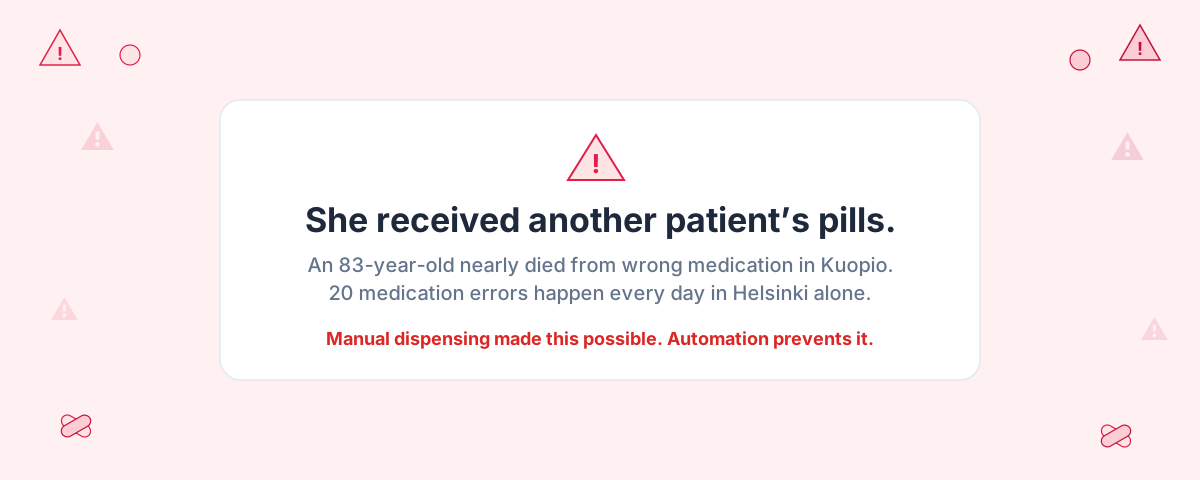
It was supposed to be a routine hospital stay. An 83-year-old woman at Harjula Hospital in Kuopio was being treated for multiple chronic conditions – diabetes, heart failure, kidney failure, thyroid disease, and hypertension. Her medication regimen was carefully calibrated to manage this complex health profile.
Then she was given another patient's medications.
The drugs she received included opioid painkillers and epilepsy medications – powerful substances that had never been prescribed to her. For a patient already managing five serious conditions with a finely balanced medication plan, the introduction of foreign drugs was catastrophic.
She lost consciousness. Her skin turned cyanotic – a bluish discoloration signaling oxygen deprivation. Medical staff rushed to administer emergency oxygen. She nearly died.
The incident, reported by Yle, required two additional weeks of hospitalization to stabilize the patient and reverse the effects of the wrongly administered drugs. Two weeks of intensive care that would not have been necessary if one simple question had been answered correctly: Is this the right medication for this patient?
How It Happened: The Failure of Manual Systems
The root cause of this near-fatal error was not a careless nurse. It was not a training failure. It was not an unusual or unpredictable event.
It was the inevitable consequence of a manual medication dispensing system combined with paper-based information transfers between hospital systems.
In Harjula Hospital, as in many Finnish care facilities, medications were not dispensed from pre-verified, patient-specific packages. Instead, nurses manually selected, prepared, and distributed medications – relying on paper records, visual checks, and human memory to ensure the right drugs reached the right patient.
When you consider the reality of a busy hospital ward – multiple patients, overlapping medication schedules, shift changes, interruptions, fatigue – the question is not why this error happened. The question is why it does not happen more often.
The answer, of course, is that it does.
20 Medication Errors Per Day in Helsinki-Uusimaa Alone
The Kuopio incident was not an isolated event. Data from HUS (Helsinki University Hospital / Helsinki-Uusimaa region) reveals that approximately 20 medication errors occur every single day in Finland's most populated hospital district.
Twenty errors per day. Seven thousand per year. In one region.
In Kuopio itself, the local healthcare system recorded 4,800 HaiPro incident reports in 2020. Of these, over 1,700 were medication-related. And of the medication-related reports, approximately 700 errors actually reached the patient – meaning the medication was administered incorrectly before anyone caught the mistake.
These are the errors that are reported. As research consistently shows, only about 10% of medication errors enter the reporting system. The true numbers are likely an order of magnitude higher.
The Anatomy of a Wrong-Patient Error
The Kuopio case represents one of the most dangerous categories of medication error: wrong-patient administration. This occurs when medications intended for Patient A are given to Patient B. The consequences can be severe because:
The patient receives drugs they were never prescribed – drugs that may be contraindicated given their existing conditions, current medications, or allergies
The patient simultaneously misses their own scheduled medications – potentially destabilizing carefully managed chronic conditions
The error often goes undetected until clinical symptoms appear – by which point the patient may be in crisis
Healthcare staff must then manage two simultaneous problems: the adverse effects of the wrong drugs and the consequences of the missed correct drugs
In the Kuopio case, every one of these factors came into play. The 83-year-old patient received opioids her body was not prepared for, epilepsy drugs she did not need, and simultaneously missed her own diabetes, cardiac, renal, and thyroid medications. The combination nearly killed her.
Manual Dispensing: A System Designed to Fail
The core problem is structural. Manual medication dispensing in hospitals and care facilities relies on a chain of human actions, each of which introduces a potential point of failure:
Medication selection – a nurse must visually identify and pick the correct medication from a storage area containing dozens or hundreds of similar-looking packages
Patient identification – the nurse must correctly match the medication to the right patient, often relying on bed numbers, name tags, or memory
Dose verification – the correct dose must be prepared manually, with calculations performed under time pressure
Timing – medications must be given at the correct intervals, often across multiple patients simultaneously
Documentation – each administration must be manually recorded, often after the fact
Shift transfers – medication information must be communicated between shifts, often through paper records or verbal handoffs
Each of these steps is a human task performed under real-world conditions of fatigue, time pressure, interruptions, and cognitive load. The system is not designed to prevent errors – it is designed to depend on the perfection of every individual performing every task, every time. That is not a safety system. That is a gamble.
The Solution: Patient-Specific Automated Dispensing
The technology to prevent wrong-patient medication errors already exists. Automated dispensing systems with patient-specific verification ensure that the right medication reaches the right patient – not through human vigilance alone, but through systematic, technology-enabled verification at every step.
MoniDose's automated dispensing ecosystem addresses the exact failure points that caused the Kuopio incident:
Patient identity confirmation before any medication is dispensed – the system verifies that the medication package matches the intended recipient, greatly reducing the risk of wrong-patient errors
Pre-verified, patient-specific medication packages eliminate the need for manual selection from shared medication storage, removing the most common source of mix-ups
Automated documentation records each dispensing event as the device reports it, creating an audit trail without relying on after-the-fact manual recording
Verification by the role responsible at each step – the pharmacy confirms its own dispensing and order fulfilment, while the care team verifies and documents administration at the bedside, so no step relies on memory alone
In the Kuopio case, the error occurred because the system relied on a nurse to manually select and deliver the correct medications in a high-pressure environment. Patient-specific verification is exactly the kind of safeguard that reduces wrong-patient errors – catching a mismatch before medication reaches the patient, rather than relying on human vigilance alone.
Finland Cannot Afford to Wait
Every day that Finnish healthcare continues to rely on manual medication dispensing, patients like the 83-year-old woman in Kuopio are at risk. Not because nurses are careless – but because the system asks humans to perform with machine-like precision in conditions where human error is inevitable.
The data is clear: 20 errors per day in HUS. 700 errors reaching patients annually in Kuopio alone. Near-fatal incidents that could have been prevented with existing technology.
The question is not whether Finland can afford to implement automated medication dispensing. The question is whether Finland can afford not to.
Sources: Yle (Kuopio Harjula Hospital incident); HUS medication error data; Kuopio HaiPro reports 2020; MoniDose patient safety research.